

Itimad-ud-Daulah's Tomb is a Mughal mausoleum on the Yamuna’s left bank in Agra, built by Nur Jahan as a memorial to her father.
Its white marble walls and semi-precious stone decoration make the Baby Taj a distinctive stop on an Agra heritage outing. Agra Fort adds another Mughal landmark to a city visit, and its practical visitor guide covers the fort.
- Setting: Yamuna’s left bank in Agra.
- From the hotel: It is about 3.7 km from this three-star hotel in Agra.
- Nearby pairing: Chini ka Rauza is 1 km north of the tomb.
- Ticket note: Friday entry costs ₹25; check the official site before you go.
Prices and times checked November 2026.
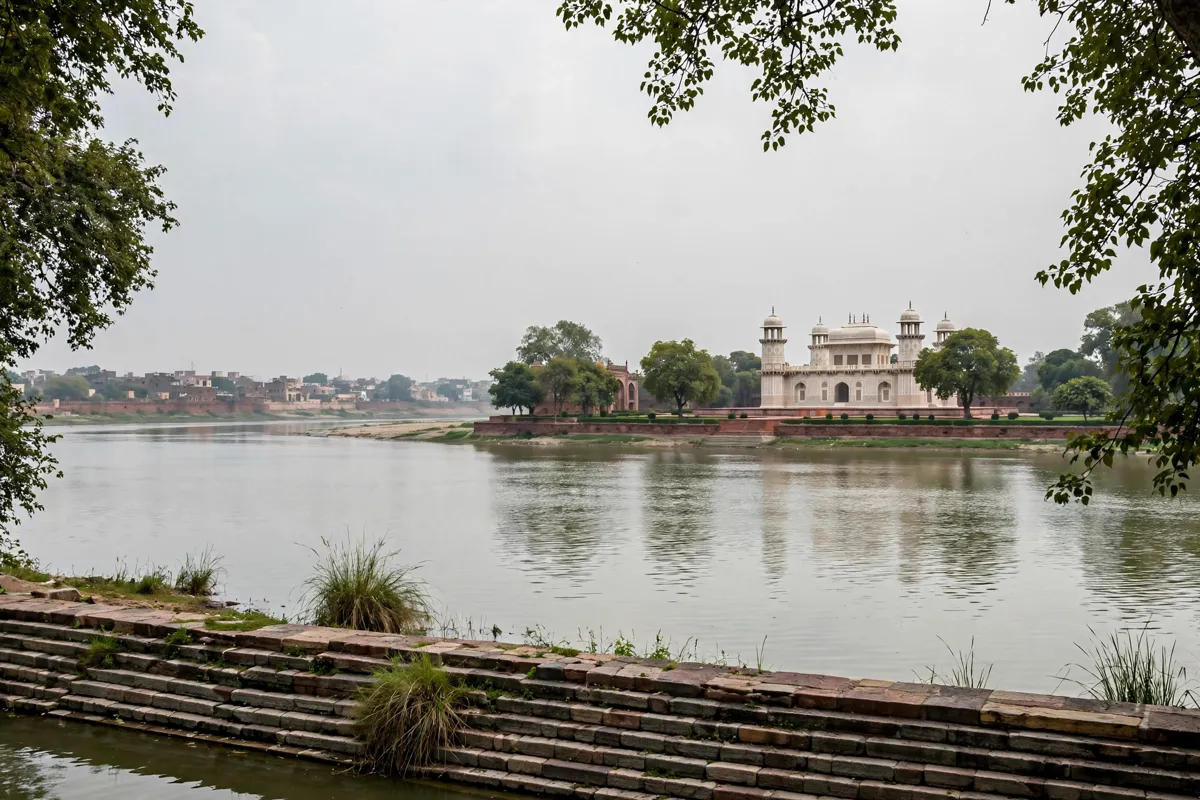
Where the tomb sits in Agra
How do you get to the riverside complex?
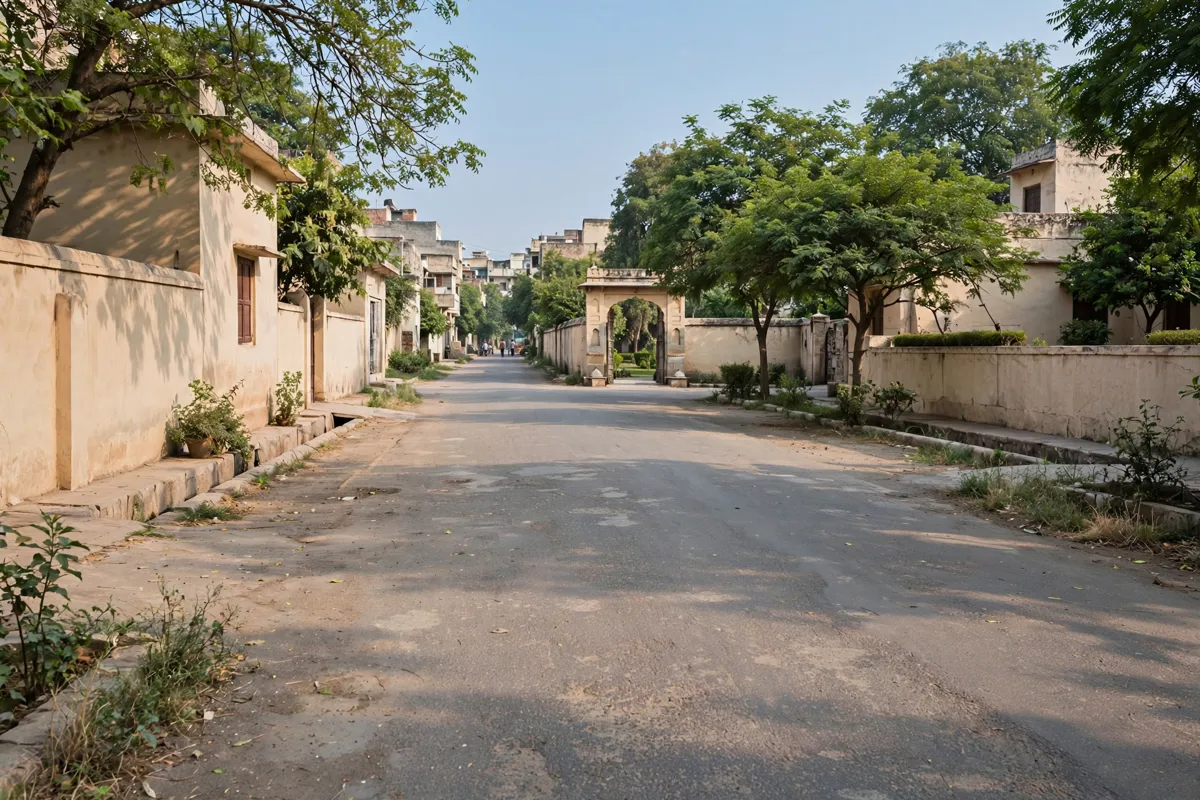
Chini ka Rauza, 1 km north along the Yamuna’s left bank, is approachable by auto-rickshaw. You can combine it with the tomb as part of the trans-Yamuna heritage circuit, an option in this Agra one-day itinerary.
What makes the architecture distinctive?
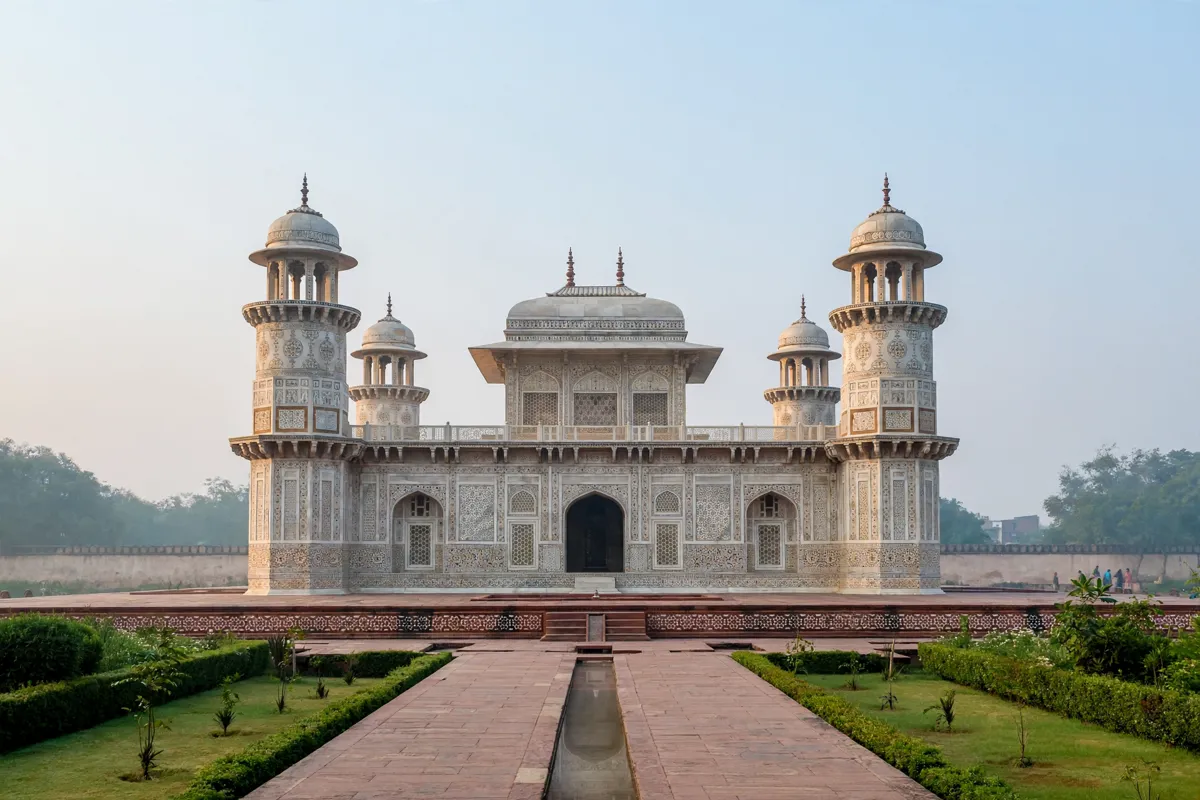
The tomb’s exterior is built of white marble from Rajasthan, with semi-precious stones set into its walls. The materials include carnelian, jasper, lapis lazuli, onyx and topaz.
Inside, carved white-marble jali screens add another layer of detail. The cenotaphs of Nur Jahan’s parents sit side by side, reflecting the building’s purpose as a family memorial.
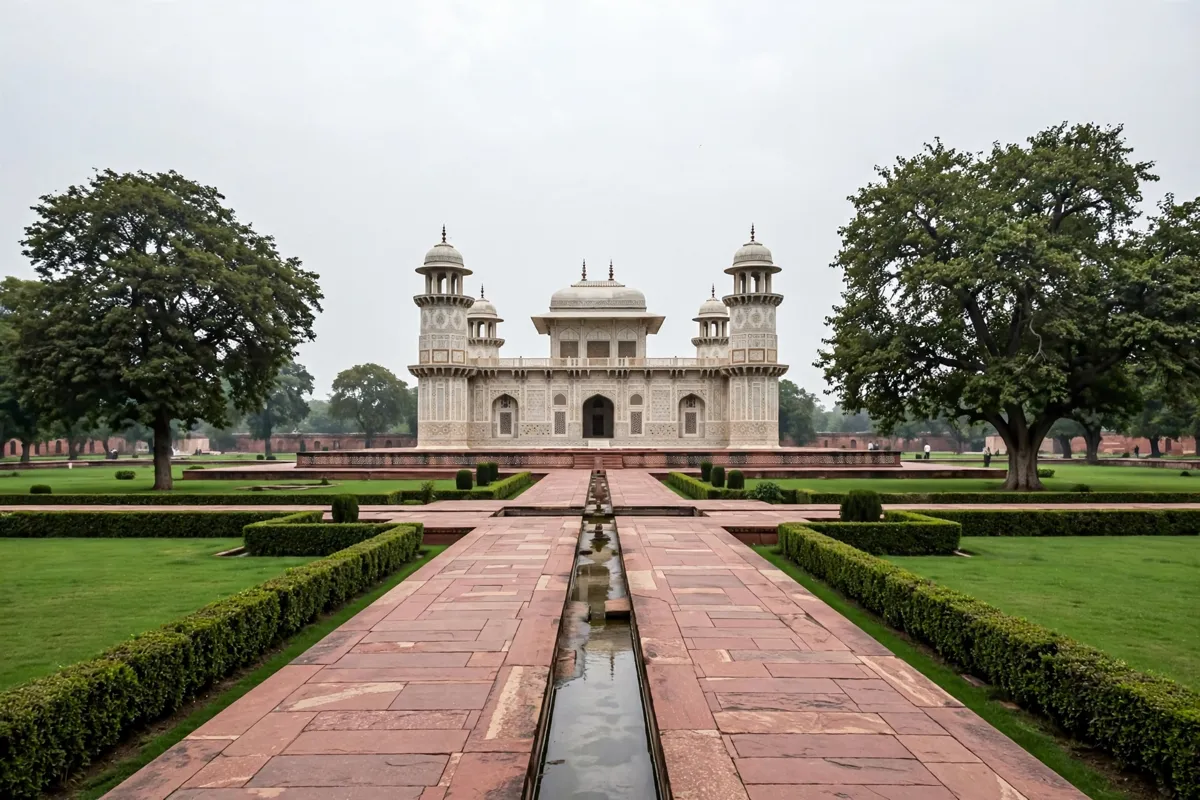
Entry and visit planning
Ticket details for Itimad-ud-Daulah vary by visitor category and day. Friday entry costs ₹25; children below 15 years enter free at the monuments covered by the visitor information.
Foreign visitors, including SAARC and BIMSTEC citizens, who buy the ADA Pathkar at one of five Agra monuments need not buy another Pathkar ticket to visit the monuments covered by the same-day arrangement.
The Pathkar costs ₹500; ADA does not levy the toll on Fridays. Fees may be revised by ASI or ADA, so check the official site before you go.
What else can you see nearby?
Chini ka Rauza offers a second riverside monument to pair with the tomb. It is the tomb of Allama Afzal Khan ‘Mullah Shukrullah Shirazi’, a poet-scholar and prime minister to Shah Jahan, built around 1635.
Its defining feature is Persian glazed-tile work, also called kashi or chini. Chini ka Rauza is the only monument in Agra faced entirely in this tilework. It is open all seven days, from sunrise to sunset, with free entry for all visitors.
How can you combine the tomb with other Mughal sights?
Itimad-ud-Daulah's Tomb stands beside the Yamuna on the river’s left bank. Nur Jahan commissioned the mausoleum for her father, Mirza Ghiyas Beg, who served as chief minister to Emperor Jahangir.
The riverside setting also places the tomb within Agra’s trans-Yamuna heritage circuit. Chini ka Rauza lies to its north, and Ram Bagh is another site on the circuit. Mehtab Bagh offers a garden viewpoint across the river toward the Taj Mahal.
FAQs
Why is Itimad-ud-Daulah's Tomb called the Baby Taj?
Baby Taj is a familiar name for the mausoleum. Its white marble construction and detailed stone decoration are among its defining features.
Who built the tomb?
Nur Jahan built it as a memorial to her father, Mirza Ghiyas Beg, chief minister to Emperor Jahangir.
Can you visit Chini ka Rauza on the same outing?
Yes. It is north of the tomb on the Yamuna’s left bank, and it can be paired with Itimad-ud-Daulah and Ram Bagh on the trans-Yamuna heritage circuit.